(Tentative) Conference Program
Location at Amherst College: Science Center
| Time | Event | Location |
|---|---|---|
| 8:00 - 9:00 am | Registration and Breakfast | Science Center Atrium |
| 9 - 9:15 am | Welcome Kelly Shaw, MAGICC Organizing Committee Chair |
Science Center E110 |
| 9:15 - 10:05 am | Session 1 - Student Talks (CS education/software engineering) | Science Center E110 |
| 10:10 - 11:10 am | Plenary Panel Title: Getting Creative: Where Art, Science, and Identity Intersect |
Science Center E110 |
| 11:15 - 12:05 pm | Session 2 - Student Talks (Social justice/mental health) |
Science Center E110 |
| 12:05 - 1:10 pm | Lunch |
Lunch will have themed discussion tables held in E108, E208, E210, E212, A013, A019, and C101 |
| 1:15 - 2:15 pm | Keynote Talk - Dr. Carole-Jean Wu |
Science Center E110 |
| 2:20 - 3:10 pm | Session 3 - Student Talks (AI) |
Science Center E110 |
| 3:10 - 3:20 pm | Break | |
| 3:20 - 4:10 pm | Session 4 - Student Talks (Theory - health) |
Science Center E110 |
| 4:15 - 5:05 pm | Session 5 - Student Talks (Environment) | Science Center E110 |
| 5:15 - 6:00 pm | Poster Session and Networking Reception | Science Center Living Room |
Detailed Program
Keynote Speaker: Carole-Jean Wu 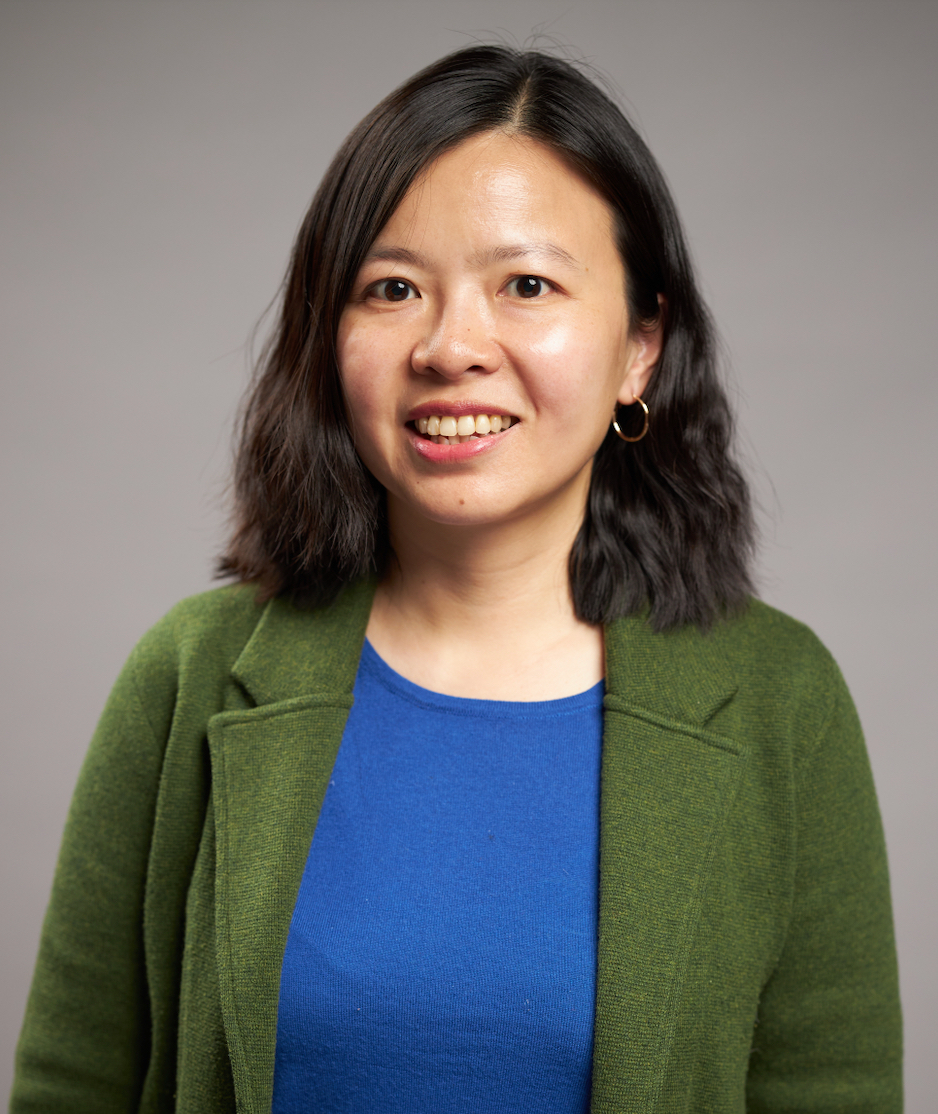
Title: A Journey Towards Sustainable AI
Bio: Carole-Jean Wu is a Director of AI Research at Meta, leading the Systems and Machine Learning team. She is a founding member and a Vice President of MLCommons – a non-profit organization that aims to accelerate machine learning innovations for everyone. Dr. Wu’s expertise sits at the intersection of computer architecture and machine learning with a focus on performance, energy efficiency and sustainability. She is passionate about pathfinding and tackling system challenges to enable efficient, scalable, and environmentally-sustainable AI technologies.
Dr. Wu is the recipient of the 2025 ACM SIGARCH Maurice Wilkes Award. Her work has been recognized with several IEEE Micro Top Picks and ACM/IEEE Best Paper Awards. In particular, her work in sustainability has influenced adoption in datacenter infrastructures at scale. She is in the Hall of Fame of ISCA, HPCA, IISWC, and serves on the study committee of the National Academies. Prior to Meta/Facebook, she was a tenured professor at ASU. Dr. Wu earned her M.A. and Ph.D. from Princeton and B.Sc. from Cornell.
Panel: Getting Creative: Where Art, Science, and Identity Intersect
Jessica Boakye
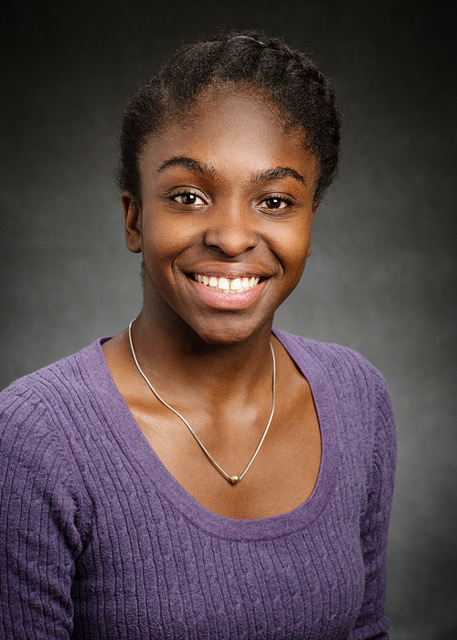
Bio: Dr. Jessica Boakye received her B.S. Degree in Civil and Environmental Engineering from the University of Massachusetts Amherst in 2014. She then received her M.S. Degree in Structural Engineering from the University of Illinois Urbana-Champaign in 2016 and Ph.D. Degree in Societal Risk and Hazard Mitigation from the University of Illinois at Urbana-Champaign in 2020. She is currently an Assistant Professor of Civil and Environmental Engineering at the University of Massachusetts Amherst. Her research group focuses on interdisciplinary methods and collaborations to quantify, predict, and mitigate the consequences of infrastructure failure or disruption. She is interested in societal consequences related to hazard impacts, sustainability concerns, and equity considerations.
Loraine Franke

Bio: Loraine is currently Lead Research Scientist on Epsilon's Visual Analytics team. She earned a PhD in Computer Science from the University of Massachusetts Boston, with research focused on machine learning and visualization for science and medicine. Her previous roles include positions at Harvard Medical School and Brigham and Women's Hospital, as well as work at Mercedes-Benz and collaborations with IBM Research and MIT.
Jena Jordahl
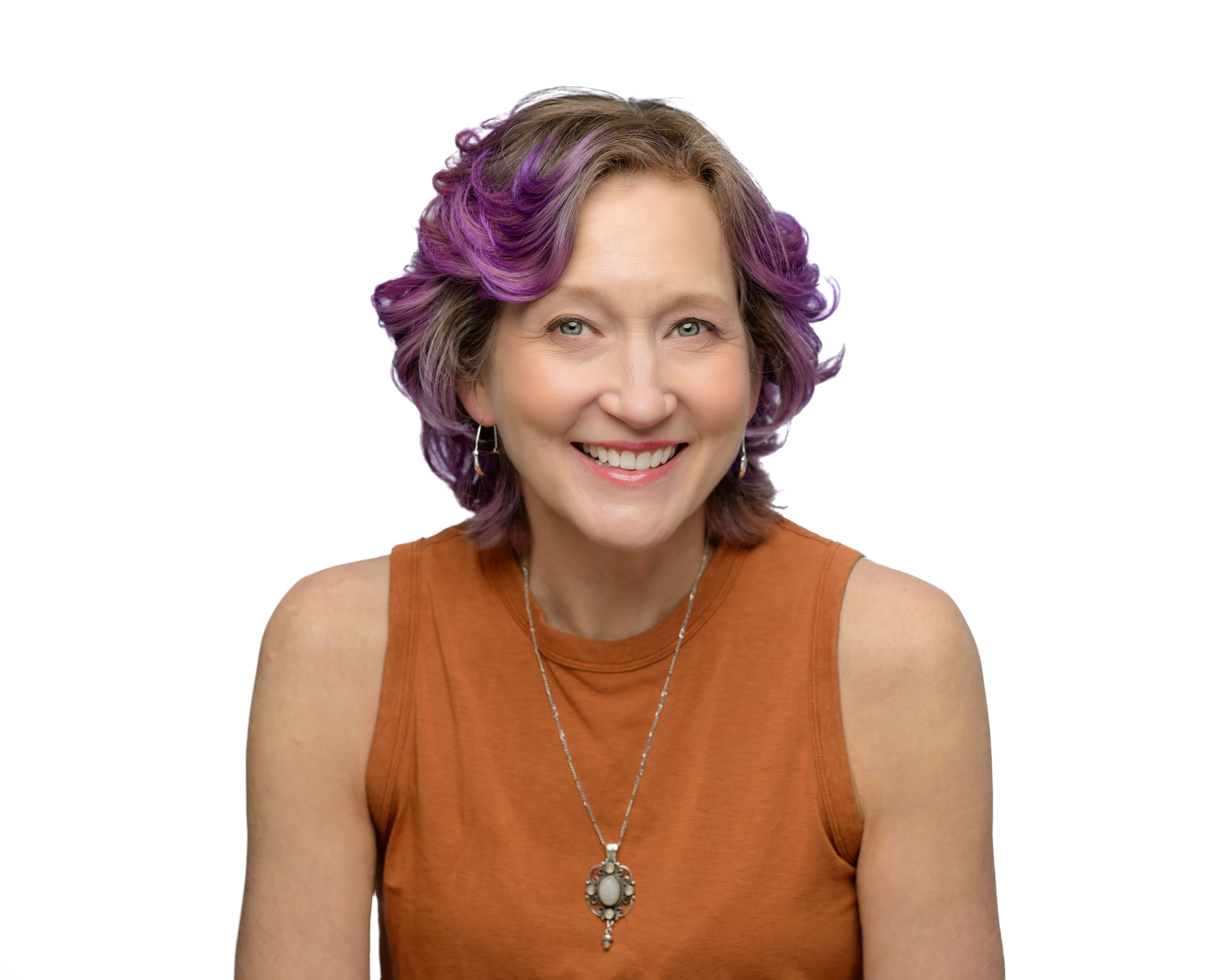
Bio: Jena Jordahl is an AI pioneer and entrepreneur with over 35 years at the forefront of artificial intelligence innovation. As Founder of Infinite IQ and Global Connect Technology, Jena architects precision multi-agent systems and collaborative search platforms that reflect diverse perspectives and deliver measurable business value. Previously a GenAI Blackbelt at Google Cloud, Jena built enterprise-grade generative AI solutions for top Fortune 500 clients and trained technical teams on advanced prompt engineering, agent methodologies, and LLM deployment. Jena's career spans the evolution of AI itself—from early machine learning research at Thinking Machines Corp in 1990 to pioneering the first vector database (U.S. Patent 2001) to recent graduate work in AI and NLP at Boston University. With deep expertise across computer vision, natural language processing, MLOps, and cloud architecture, Jena has delivered transformative systems for organizations ranging from the Department of Defense to Barnes & Noble, consistently achieving breakthrough results like 30% cost reductions and award-winning personalization engines. Jena holds an MS in Artificial Intelligence from Boston University and a BA in Cognitive Science/AI, Philosophy, and Computer Science from Gustavus Adolphus College.
Jasmine Roberts
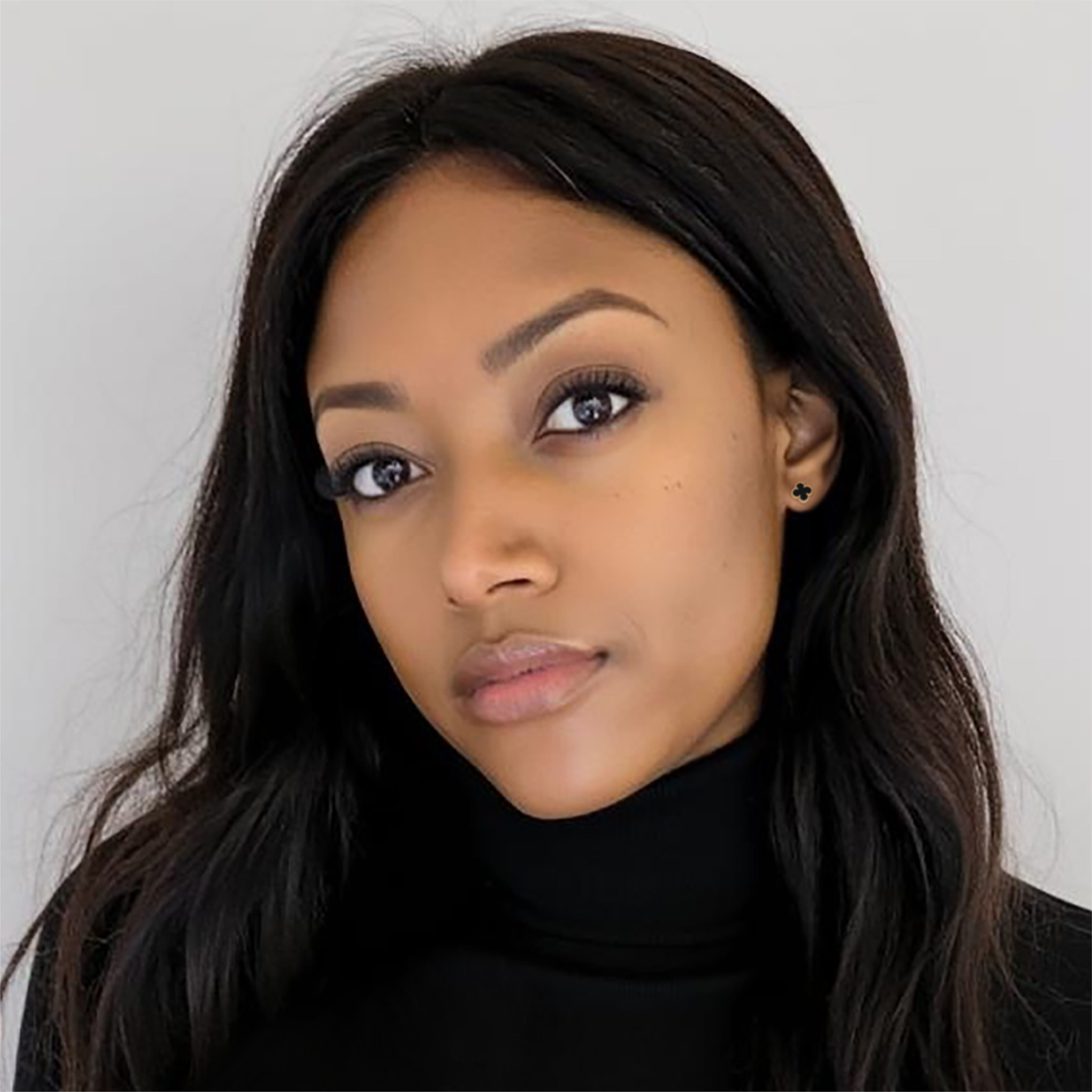
Bio: Jasmine is an AR/VR engineer whose career bridges applied physics, computer engineering, and immersive media. With over a decade of experience at the intersection of engineering and design, Jasmine has worked across industry, academia, and research, developing extended reality experiences.
As a Robotics Institute Fellow at Carnegie Mellon, Jasmine focuses on writing fast, optimized code that enables immersive experiences to run smoothly on limited hardware, bridging the gap between advanced design concepts and real-world device constraints. Recently, Jasmine was at NASA Glenn Research Center, where she designed interactive VR educational experiences that visualize advanced aerospace materials at the atomic scale.
Jasmine’s prior academic path includes a Master of Design in Design Technology from Harvard Graduate School of Design, research at the MIT Media Lab and a B.S. in Applied Physics (Materials Science) and Electrical Engineering from Columbia University. Her work has been recognized with fellowships from Mozilla, Oculus, and Epic Games, and she was named to the Forbes 30 Under 30 – Games list in 2019.
Speaker: Andy Mendez 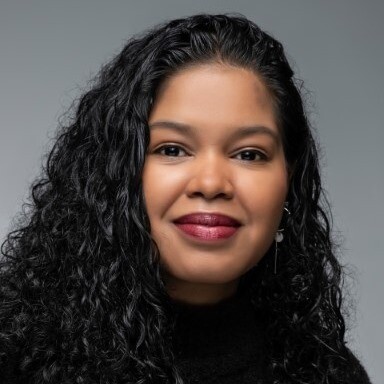
Title: Job Searching in a High-Tech World
Update: Talk will not be live, but it is available here
Detailed Program
Session 1: CS education/software engineering
1. Building Cyber Ranges to Empower Early-Career Cybersecurity Learners, Daniel Conde2. Strengthening Web Application Security, Sri Santhi Samineni, Divya Sri Sathya Prathipati and Medha Pujari
3. Personalized Soft Skills Training Through Experiential Learning, Aakash Mukherjee
4. Music Player App, Maria Delia and Paige DeSiata
5. Modular Bridge Courses to Combat Credit Loss in CS Transfer Pathways, Carolyn Jones and Carla Brodley
Session 2: Social justice - Mental health
1. Dark Patterns in social media: How infinite scroll shapes productivity and mental wellbeing, Ayana Syuy2. Digital Mental Health Tools for Diverse Populations: Causal Inference for Heterogeneous Treatment Effect Estimation, Bhargavi Patil, Thu Ngo and Tony Liu
3. Disengagement Prediction in Digital Mental Health Tool using Survival Analysis, Thu Ngo, Bhargavi Patil and Tony Liu
4. Designing for Gender Differences and Perceptions, Natasha Shorrock
5. AI Attorney in the Schwartz Case: Harmful or Helpful?, Christina Nguyen
Session 3: AI
1. GPT4AMR: Does LLM-based Paraphrasing Improve AMR-to-text Generation Fluency?, Jiyuan Ji and Shira Wein2. Generating Text from Uniform Meaning Representation, Emma Markle, Reihaneh Iranmanesh and Shira Wein
3. Building an Open-source 3D-printed expressive perceptual mechatronic Robot Head for Intercultural Human Interaction, Sarina Talerico and Gary Holness
4. Neuro-Symbolic Hybrid Architectures: Combining Pattern Recognition with Logical Reasoning, Manikdeep Kaur
5. Collision Detection in Motion Planning, Siyan Dai, Shawana Rahman and Diane Uwacu
Session 4: Theory / Health
1. Smooth solutions of the 3 x 3 compressible Euler equations, Andry Brinsko2. Evaluating AlphaFold3's Accuracy of Binding Affinity Predictions in Cancer Signaling Pathways, Shani Getz and Kendra Marcus
3. A Computational Approach for Rapid Coral Health Assessment, Maithili Ubgade and Steve Vollmer
4. Disambiguating Voluntary and Involuntary Upper-Limb Movement Post-Stroke Using Sensor and GPS Data, Bijyeta Maharjan
5. Going Through the Motions with Meta's Project Nymeria, Betsy-Jane Paul-Odionhin, Jorge Otero-Millan and Emily A. Cooper
Session 5: Environment
1. Analysis of Food Procurement Trends Across U.S. Colleges, Radiah Khan2. How Low Can We Go?: Analyzing Spatiotemporal Workload Shifting to Reduce U.S. Data Center Emissions, Mary-Alice Wieland and Tammy Sukprasert
3. Beyond Efficiency: Personalized and Fair Order Assignment for Sustainable Food Delivery, Eugene Shim, Trisha Atluri and Christine Bassem
4. Automated SDG Classification and Visualization of Climate Action and Sustainability Research through a Centralized Web Platform, Mai Chi Le, Nikko Bovornkeeratiroj and Quan Hoang Truong
Student Posters
- Exploring Imposter Phenomenon Among STEM Students at UMass Boston, Melaku Mohammed, Jariel Rodriguez and Amanda Potasznik
- Creating an Online Application to Enhance Ancient Greek Language Learning, Lauren Hall
- Optimizing Intervention Combinations for HPV and Cervical Cancer, Ashna Guha, Chaitra Gopalappa, Ruanne Barnabas and Jesse Heitner
- Breakpoints, Amelia Henzel, Yewon Lee, Annie Kim, Hamnah Aleem and Anh Tran
- Achieving Data Compression through the Overlap of Contiguous Files, Elizabeth Dvorsky
- Automated Pipeline for Calcium Transient Analysis in Engineered Heart Tissue, Jenna Kim, Hendrik Windel and Daniel Haehn
- Protein-Ligand Affinity using Motion Planning, Farzana Chowdhury, Ramisa Mozumdar and Diane Uwacu
- Supporting User Engagement with Helper Therapy in a Mental Health Support Text Messaging Program, Thu Ngo, Bhargavi Patil, Tony Liu, Chris Karr, Theresa Nguyen, Rachel Kornfield and Jonah Meyerhoff
- Analysis of Food Procurement Trends Across U.S. Colleges, Radiah Khan
- Designing for Gender Differences and Perceptions, Natasha Shorrock
- Generating Text from Uniform Meaning Representation, Emma Markle, Reihaneh Iranmanesh and Shira Wein
- How Low Can We Go?: Analyzing Spatiotemporal Workload Shifting to Reduce U.S. Data Center Emissions, Mary-Alice Wieland and Tammy Sukprasert
- Evaluating AlphaFold3's Accuracy of Binding Affinity Predictions in Cancer Signaling Pathways, Shani Getz and Kendra Marcus
- Smooth solutions of the 3 x 3 compressible Euler equations, Andry Brinsko
- Building an Open-source 3D-printed expressive perceptual mechatronic Robot Head for Intercultural Human Interaction, Sarina Talerico and Gary Holness
- GPT4AMR: Does LLM-based Paraphrasing Improve AMR-to-text Generation Fluency?, Jiyuan Ji and Shira Wein
- Disengagement Prediction in Digital Mental Health Tool using Survival Analysis, Thu Ngo, Bhargavi Patil and Tony Liu
- Disambiguating Voluntary and Involuntary Upper-Limb Movement Post-Stroke Using Sensor and GPS Data, Bijyeta Maharjan
- Collision Detection in Motion Planning, Siyan Dai, Shawana Rahman and Diane Uwacu